
1. Introduction
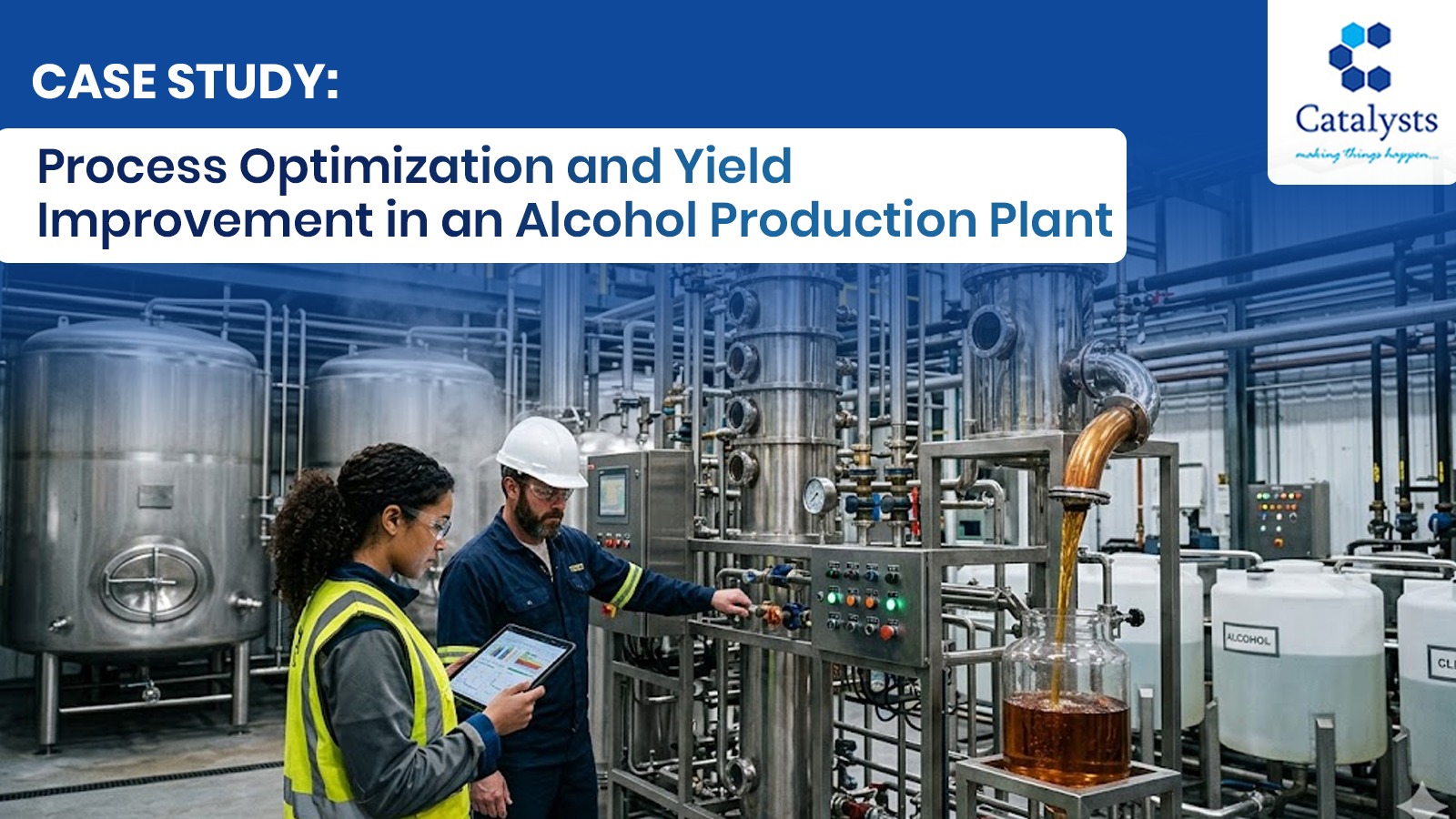
This case study describes the operational challenges encountered in a grain-based alcohol production plant and the process improvements implemented to enhance starch conversion, alcohol percentage, yield, and overall plant capacity. The study focuses on improvements in raw material handling, enzyme dosing, and liquefaction practices that led to stable and efficient plant operation.
2. Plant Overview
The plant produces alcohol using grain flour as the primary raw material. The process includes milling, slurry preparation, liquefaction, saccharification, fermentation, and distillation. Plant performance is mainly evaluated through starch conversion efficiency, Dry Solids (DS), alcohol percentage, wash flow rate, and daily production capacity.
Plant Capacity: 230 KLPD
Enzyme Dosing pattern:
1. Fortiva revo x: (0.12kg/TOS) in premasher and FLT Tank
2. SPUT: (0.50kg /TOS) in Fermenter
3. Bactoferm and Alcozyme : (0.4 ppm and 5 ppm) in Fermenter
4. Ethanol red Dry yeast: (80 kg ) in PF and Fermenter
3. Operational Challenges Identified
3.1 Dosing Pattern optimised
The plant did not have a dedicated enzyme dosing tank. Enzymes were added manually, leading to inconsistent dosing and dependency on operator handling. This resulted in variation in starch hydrolysis and reduced process consistency.
3.2 Inconsistent Flour Supply
Due to the absence of a flour storage silo, flour supply to the process was inconsistent. This caused irregular feeding during filling operations and increased filling hours in certain batches.
3.3 Increased Filling Hours
Filling hours were frequently higher than the standard operating time due to:
- Frequent boiler tripping, leading to interruption in steam supply
- Temporary stoppage of flour feeding due to manpower shortages
- Mechanical issues in the flour handling system
These factors caused repeated process interruptions and delayed batch preparation.
3.4 Coarse Flour Particle Size
Irregular flow from the milling section resulted in coarse flour particles entering the process. Coarse particle size reduced effective starch exposure, leading to incomplete starch conversion during liquefaction.
3.5 Sub-optimal Liquefaction Practice
Thin slop was being mixed into the liquefaction section, which diluted the slurry, reduced Dry Solids (DS), and caused PHE choking issues. This negatively affected enzyme performance and overall process stability.
4.1 Lower Alcohol Percentage and Yield
Due to the combined effect of the above issues, the plant was previously unable to achieve a higher alcohol percentage and optimal yield on a consistent basis.
5. Improvements Implemented
5.1 Flour Particle Size Control
Continuous and uniform flow from the milling section was ensured to reduce coarse particle size in the flour supply. This improved starch accessibility and enhanced starch hydrolysis.
5.2 Liquefaction Process Optimization
Mixing of thin slop into the liquefaction section was stopped to avoid dilution. This helped maintain optimal process concentration and improved pH stability.
5.3 Enzyme Dosing Optimization
Enzyme dosing was optimized to ensure sufficient and uniform enzyme availability throughout the liquefaction process. This improved starch breakdown and reduced variability in process performance.
5.4 Improvement in Dry Solids (DS)
With better raw material quality and controlled liquefaction conditions, Dry Solids (DS) increased. Higher DS resulted in improved fermentable sugar concentration.
6. Results and Observations
6.1 Improved Starch Conversion
Starch conversion efficiency improved significantly after process optimization. Residual starch levels were reduced to 0.25–0.30% in 100% maize , indicating effective starch hydrolysis.
5.2 Resolution of PHE Choking
Reduction of thin slop mixing and improved enzyme dosing stabilized the pH during liquefaction, resolving recurring PHE choking issues.
5.3 Increase in Wash Flow Rate
Improved process stability allowed an increase in wash flow rate, which reached 85 m³, enabling smoother and more consistent plant operation.
5.4 Improvement in Alcohol Percentage
Previously, the plant was unable to achieve a higher alcohol percentage due to process inefficiencies. After implementing the improvements, a significantly higher alcohol percentage was achieved consistently, reflecting improved fermentation efficiency.
5.5 Increase in Alcohol Yield
An approximate 10-15 % of alcohol that has been achieved before was achieved due to improved starch conversion, increased DS, and optimized enzyme usage.
5.6 Achievement of Target Plant Capacity
Following the implementation of the above improvements, the plant was able to operate steadily at a production capacity of 140-205 KLPD, demonstrating enhanced throughput and process reliability.
6. Key Learnings
- Consistent raw material quality is critical for efficient starch conversion
- Controlled enzyme dosing improves process stability and yield
- Avoiding dilution in liquefaction helps maintain optimal DS and pH
- Addressing operational interruptions significantly improves plant performance
7. Conclusion
This case study highlights how focused process improvements in raw material handling, enzyme dosing, and liquefaction practices can significantly enhance plant performance. The implemented changes resulted in improved starch conversion, higher alcohol percentage, a 2% increase in yield, improved wash flow, and stable operation at 200 KLPD capacity. These improvements contributed to better efficiency, reliability, and sustainability of plant operations.
Recent Posts
SafSpirit™ M-1: Building Premium Malt Spirits from the Fermentation Stage
Discover SafSpirit™ M-1, where premium malt spirits are crafted from the fermentation stage. Elevate your spirits experience with our expert techniques.
-1775618224.png)
HPLC Analysis of Fermented Wash in Grain Ethanol Production: What Your Sample Is Really Telling You
Discover the insights HPLC analysis provides in fermented wash for grain ethanol production. Uncover what your sample reveals about quality and efficiency.
Case Study: Revolutionizing Sugar Recovery Through Microbial Control Enzymes
Uncover the potential of microbial control enzymes in revolutionizing sugar recovery. Our case study highlights innovative solutions for improved production efficiency.
Catalysts Connect
Keep up to date with our latest news and analysis by subscribing to our regular magazine and newsletter
Post a comment
Your email address will not be published.