
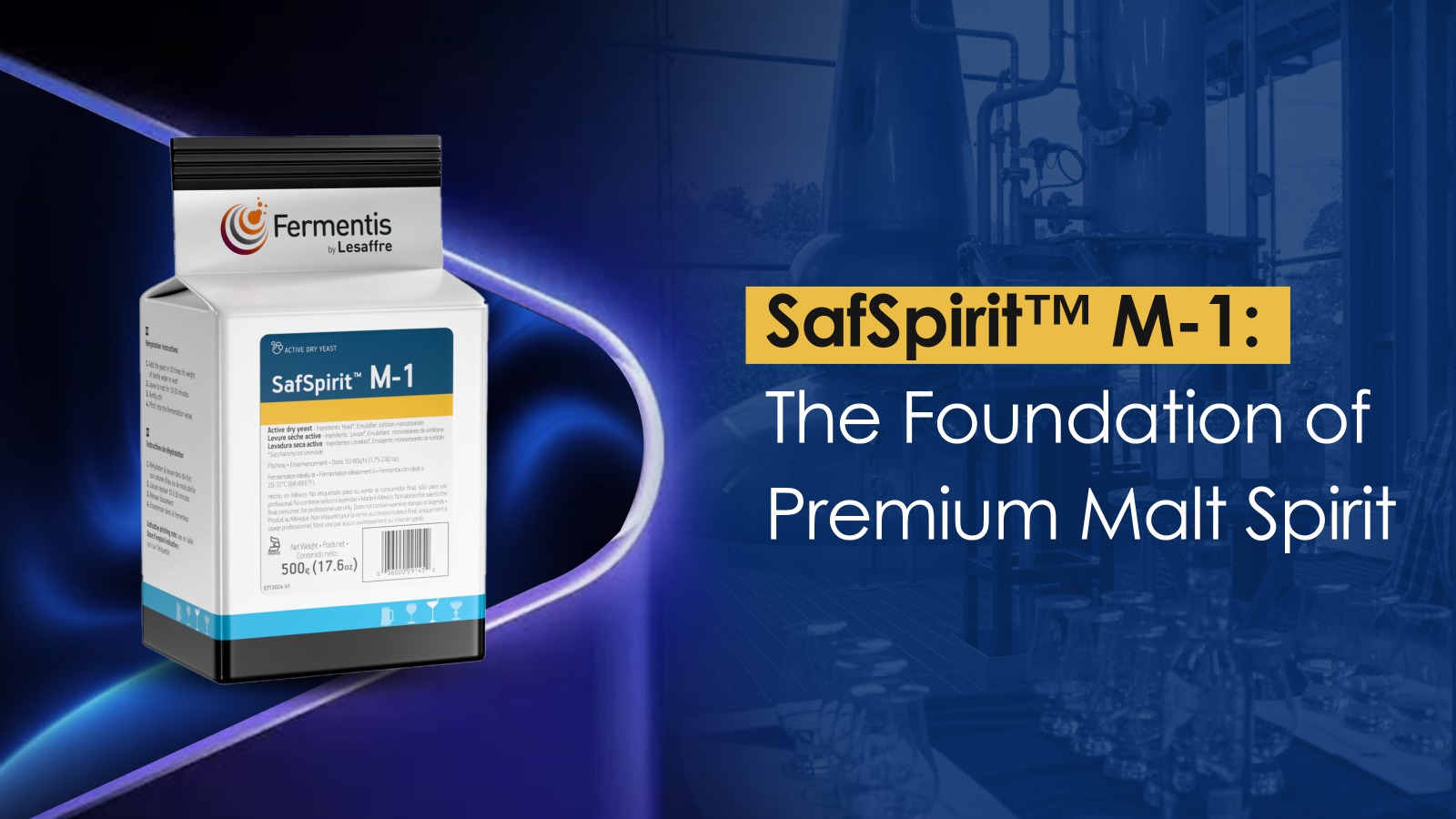
SafSpirit™ M-1: Building Premium Malt Spirits from the Fermentation Stage
In the evolving landscape of India’s premium spirits industry, distillers are increasingly shifting focus from volume to value. As the market matures, the emphasis is no longer just on distillation and cask selection—but on the foundational stages that shape a spirit’s long-term character. Among these, fermentation stands out as a critical, yet often underleveraged, driver of flavour.
At the heart of this process lies yeast.
Far from being a simple alcohol-producing agent, yeast defines a significant portion of a spirit’s aromatic and structural identity. One strain that has gained strong relevance in malt whisky-style production is SafSpirit™ M-1—a yeast long associated with traditional Scotch whisky, and now increasingly adopted by Indian distillers aiming for consistency and maturation-friendly profiles.
Why Yeast Choice Matters More Than Ever
In malt-based distillation, especially where enzyme additions may be limited by stylistic choices, yeast must do more than just ferment sugars. It must handle complex substrates, perform reliably under varying conditions, and most importantly, produce a balanced spectrum of flavour compounds.
SafSpirit™ M-1 is designed specifically for these demands. It offers:
- High alcohol tolerance (up to approximately 15% ABV)
- Strong attenuation, including the ability to utilise more complex sugars
- Consistent fermentation kinetics across batches
- Robust performance under temperature and raw material variability
For Indian distilleries operating in warmer climates and often dealing with fluctuations in malt quality, this reliability translates directly into production stability and predictable outcomes.
The Flavour Advantage: Designed for Maturation
What truly distinguishes M-1 is its ability to generate a maturation-friendly congener profile.
During fermentation, yeast produces a wide range of compounds—primarily esters, higher alcohols, and organic acids—that collectively shape the sensory profile of the spirit. These compounds are not static; they evolve significantly during cask ageing.
· Esters are highly volatile compounds produced by yeast as byproducts of metabolism and typically provide fruity and floral aromas. Examples include isoamyl acetate (banana), ethyl acetate (pear/solvent), and ethyl hexanoate (apple/aniseed).
· Higher alcohols (Fusel Alcohols) are produced by yeast metabolism from amino acids and sugars and often contribute warming, floral, or solvent-like notes. Key examples include isoamyl alcohol (banana/pear and phenylethyl alcohol (rose/perfume).
· Organic acids include lactic, acetic, butyric, and hexanoic acids, which can undergo important esterification reactions during maturation to enhance fruity and floral notes.
SafSpirit™ M-1 is known for producing these elements in a balanced and integrated manner, avoiding extremes. The result is a new-make spirit that is expressive but not aggressive—well-suited to interaction with oak over time.
From New-Make to Matured Spirit
A key challenge in whisky production is ensuring that the character developed during fermentation translates effectively into the matured spirit. M-1 addresses this by creating a profile that evolves positively in cask.
In new make, distillers can typically expect:
- A clean cereal backbone reflecting the malt
- Subtle fruity notes, often in the orchard fruit spectrum
- Light floral tones
- Gentle warmth without harshness
As the spirit matures, these characteristics develop into:
- Richer fruit complexity, including dried and stewed fruit notes
- Enhanced aromatic depth through esterification
- Improved integration of alcohols, leading to a smoother mouthfeel
- Better synergy with oak-derived compounds such as vanillin, lactones, and spice
This makes M-1 particularly effective for ageing in ex-bourbon barrels, virgin oak, and wine casks, all of which are increasingly used by Indian producers to create differentiated profiles.
Operational Considerations for Distillers
While yeast selection is critical, outcomes are influenced by how fermentation is managed. Some general best practices when working with strains like M-1 include:
- Temperature control: Lower fermentation temperatures tend to produce cleaner, more delicate profiles, while higher temperatures can drive heavier, fruit-forward character.
- Consistent pitching rates: Ensuring healthy yeast populations helps maintain predictable fermentation performance and avoids off-flavour development.
- Cut point strategy: The choice of distillation cuts can significantly influence how yeast-derived compounds are carried into the final spirit, allowing distillers to fine-tune style.
These should be treated as guiding principles, with adjustments made based on specific plant design and production goals.
Versatility Across Spirit Styles
Although widely recognised for single malt whisky production, SafSpirit™ M-1 is not limited to one category. Its balanced congener profile and robust fermentation characteristics make it suitable for:
- Single malt-style whiskies
- Blended malt components requiring structure and complexity
- Grain-based spirits where added flavour depth is desired
- Barrel-aged rums seeking enhanced ester-driven profiles
This flexibility allows distillers to maintain consistency across product lines while still achieving stylistic variation through process adjustments.
Conclusion: A Strategic Tool for Premiumisation
As Indian distillers continue to push towards globally competitive, high-quality spirits, the importance of fermentation cannot be overstated. Yeast selection is no longer a routine decision—it is a strategic one.
SafSpirit™ M-1 offers a compelling combination of process reliability and flavour precision, helping distillers create spirits that not only perform well in production but also mature with clarity and complexity.
In an industry where time, consistency, and differentiation are key, starting with the right yeast may be one of the most effective ways to build a premium spirit—from the very first stage.
Recent Posts
-1775618224.png)
HPLC Analysis of Fermented Wash in Grain Ethanol Production: What Your Sample Is Really Telling You
Discover the insights HPLC analysis provides in fermented wash for grain ethanol production. Uncover what your sample reveals about quality and efficiency.
Case Study: Process Optimization and Yield Improvement in an Alcohol Production Plant
Uncover the strategies behind successful process optimization and yield enhancement in an alcohol production plant, leading to significant performance gains.
Case Study: Revolutionizing Sugar Recovery Through Microbial Control Enzymes
Uncover the potential of microbial control enzymes in revolutionizing sugar recovery. Our case study highlights innovative solutions for improved production efficiency.
Catalysts Connect
Keep up to date with our latest news and analysis by subscribing to our regular magazine and newsletter
Post a comment
Your email address will not be published.