
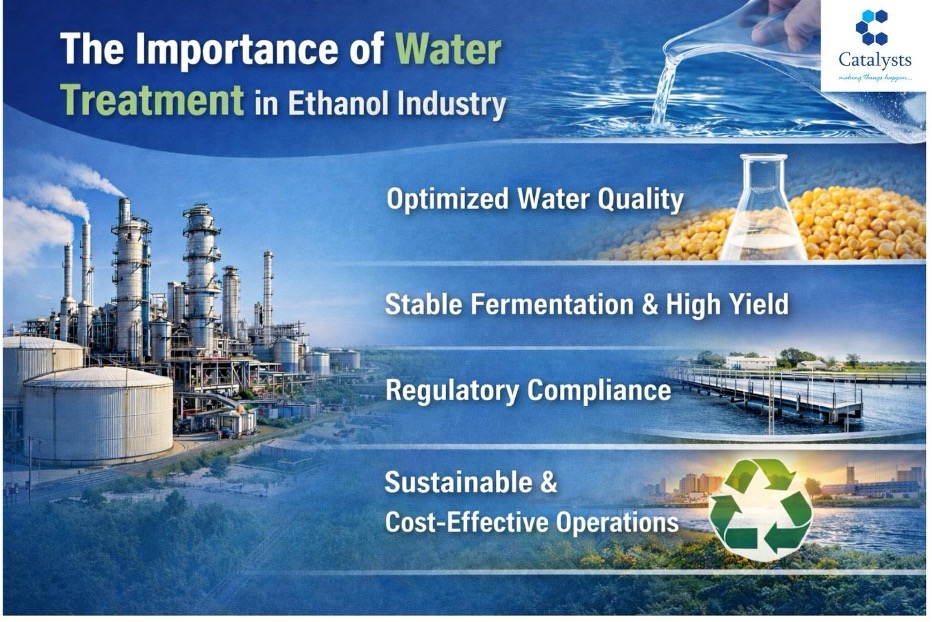
In the ethanol industry, water is not just a utility—it is a critical process component. From feedstock preparation and fermentation to distillation, utilities, and effluent management, water quality directly influences process efficiency, yield optimization, equipment life, and regulatory compliance.
As ethanol production scales up to meet blending targets and sustainability commitments, effective water treatment has become a strategic necessity rather than an operational add-on.
Water as a Critical Process Input
Ethanol production consumes water across multiple stages:
- Mash preparation
- Pre fermentation
- Distillation
- Boiler and cooling tower operations
- CIP and plant sanitation
Inadequately treated water can adversely affect enzyme performance, yeast health, heat transfer efficiency, and overall plant stability, making water treatment an essential foundation for consistent operations.
Impact of Water Quality on Yield and Process Stability
Raw water often contains dissolved salts, hardness, silica, organic matter, and microbial contaminants. These impurities can lead to:
- Yeast stress and inconsistent fermentation performance
- Scaling and fouling of heat exchangers and pipelines
- Increased chemical consumption and maintenance costs
Optimized water treatment ensures stable fermentation, higher ethanol recovery, and improved operational reliability.
Boiler and Cooling Water Management
Boilers and cooling systems are among the most water-sensitive utilities in an ethanol plant. Poor water quality results in:
- Scale formation and reduced heat transfer
- Corrosion of critical equipment
- Increased energy consumption
- Frequent shutdowns and higher maintenance loads
- Microbial contamination & fouling
- Algae growth
Proper boiler feed water and cooling water treatment:
- Enhances energy efficiency
- Extends equipment life
- Reduces unplanned downtime
- Improves overall plant economics
Effluent Treatment and Environmental Compliance
Ethanol plants generate high-strength effluents such as spent wash, process wastewater, and utility blowdowns, typically characterized by:
- High COD and BOD
- Elevated TDS levels
- Organic and nutrient load
Advanced effluent treatment solutions—including anaerobic digestion, aerobic treatment, evaporation systems, and ZLD approaches—are critical to:
- Meet statutory discharge norms
- Minimize environmental impact
- Enable maximum water reuse
With increasingly stringent environmental regulations, efficient wastewater treatment is integral to sustainable ethanol operations.
Water Recycling and Sustainable Operations
Water stewardship has become a key performance indicator for modern ethanol plants. Effective water treatment enables:
- Higher levels of water recycling and reuse
- Reduced freshwater intake
- Improved water consumption ratios
- Progress toward Zero Liquid Discharge (ZLD)
These measures not only address water scarcity challenges but also strengthen long-term operational sustainability and ESG performance.
Cost Optimization Through Smart Water Treatment
Well-designed water treatment systems contribute directly to cost efficiency by:
- Improving ethanol yield consistency
- Reducing enzyme and chemical costs
- Lowering energy and maintenance costs
- Minimizing compliance risks and operational disruptions
Strategic water management delivers measurable economic and operational benefits across the plant lifecycle.
Integration with Advanced Process Technologies
Modern ethanol facilities increasingly integrate water treatment with:
- Enzyme-optimized process conditions
- Utility efficiency programs
- Advanced monitoring and control systems
Aligning water treatment with process biology and utilities ensures maximum conversion efficiency and operational robustness.
Conclusion
Water treatment plays a fundamental role in driving efficiency, sustainability, and profitability in the ethanol industry. As production capacities increase and regulatory expectations tighten, et
Recent Posts
How Bactoshield Strengthened Fermentation Performance in a Syrup-Based Ethanol Distillery
Explore the impact of Bactoshield on fermentation in syrup-based ethanol distilleries, driving efficiency and maximizing output for distillers.
-1785425257.jpg)
Grain vs Molasses: Which Feedstock Creates the Bigger Process Challenge?
Explore the challenges of using grain versus molasses as feedstocks. Uncover insights on efficiency, cost, and processing difficulties in this comprehensive analysis.
DDGS Quality: What Distilleries Often Overlook
Uncover the critical factors of DDGS quality that distilleries frequently miss. Enhance your distilling process and optimize feed efficiency today.
Catalysts Connect
Keep up to date with our latest news and analysis by subscribing to our regular magazine and newsletter
Post a comment
Your email address will not be published.