
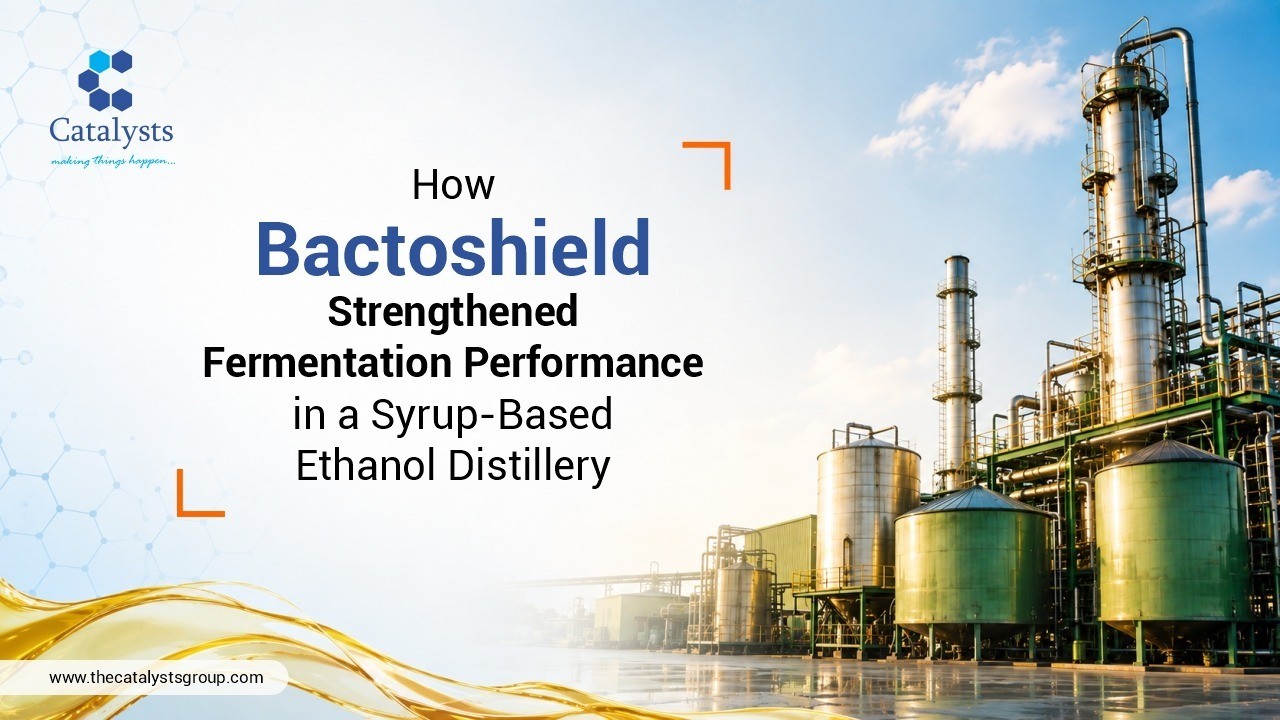
Fermentation performance in a syrup-based ethanol distillery depends on maintaining the right conditions for yeast to work consistently. Feedstock quality, yeast health, nutrients and process parameters all influence the process, but bacterial contamination can significantly affect fermentation stability.
Uncontrolled bacterial growth competes with yeast for nutrients and produces organic acids that can increase Total Volatile Acidity (TVA), placing additional stress on yeast and contributing to process variability. Effective microbial control is therefore an important part of maintaining a stable fermentation environment.
Why Bacterial Control Matters
Bacterial contamination can affect fermentation by:
- Competing with yeast for available nutrients.
- Producing organic acids and increasing TVA.
- Increasing microbial pressure on yeast.
- Contributing to fermentation variability.
- Affecting process stability when operating conditions fluctuate.
For syrup-based ethanol production, variations in syrup Brix and flow can add further challenges. Managing bacterial pressure can help maintain conditions that are more favourable for consistent yeast activity.
The Role of Bactoshield
Bactoshield is a microbial control solution designed to help manage unwanted bacterial activity during industrial ethanol fermentation.
As part of an integrated fermentation program, Bactoshield helps:
- Control unwanted bacterial contamination.
- Reduce microbial pressure on yeast.
- Support healthier yeast activity.
- Manage Total Volatile Acidity (TVA).
- Maintain a cleaner and more stable fermentation environment.
- Support consistent fermentation without disrupting the existing process cycle.
By reducing bacterial interference, Bactoshield helps create conditions that allow yeast to perform more effectively.
Supporting Yeast Performance
Yeast performance is influenced by several factors, and microbial pressure is one of them. Even when feedstock and process parameters are carefully managed, bacterial activity can introduce additional stress into the fermentation system.
Reducing this microbial pressure can help create a more favourable environment for yeast, particularly in syrup-based distilleries where changes in syrup quality, Brix or flow can contribute to process variability.
The objective is not simply to reduce bacterial contamination, but to support a more stable fermentation environment for consistent yeast performance.
Bactoshield in Application
The practical value of this approach was demonstrated in a 150 KLPD syrup-based ethanol distillery experiencing high bacterial activity, elevated TVA and fluctuations in fermentation performance.
Bactoshield was implemented as part of an integrated fermentation program alongside Catalysts ADY and Ecomol, with the objective of strengthening microbial control while maintaining the existing fermentation cycle.
A key improvement was the reduction in TVA:
995 ppm -> 555 ppm
This represented a reduction of 440 ppm, indicating improved microbial control and a healthier fermentation environment.
The plant also observed improved fermentation stability despite variations in syrup quality, while maintaining the existing fermentation cycle without increasing process time.
Spent wash recycle increased from 380 m³ to 478 m³ as part of the broader process improvements.
These results demonstrate how effective bacterial control can support fermentation performance when integrated with other elements of a plant’s fermentation management program.
Why Microbial Management Matters
For ethanol producers, microbial control is more than a contamination-control measure. Maintaining controlled microbial conditions can help support:
- Healthier yeast activity by reducing unwanted microbial pressure.
- Fermentation consistency by supporting more stable conditions.
- TVA management through better control of bacterial activity.
- Process reliability by reducing microbial variability.
The right microbial-control strategy should always be considered in relation to the plant’s feedstock, operating conditions and overall fermentation program.
Conclusion
In syrup-based ethanol fermentation, maintaining microbial balance is an important part of supporting stable process performance.
Bactoshield provides a targeted approach to bacterial management, helping distilleries control unwanted microbial activity while supporting conditions favourable for yeast performance.
The plant application demonstrates how strengthening microbial control can contribute to measurable improvements, including a 440 ppm reduction in TVA and improved fermentation stability.
Looking to strengthen microbial control in your syrup-based ethanol fermentation process? Connect with The Catalysts Group to explore how Bactoshield can support your plant.
Recent Posts
-1785425257.jpg)
Grain vs Molasses: Which Feedstock Creates the Bigger Process Challenge?
Explore the challenges of using grain versus molasses as feedstocks. Uncover insights on efficiency, cost, and processing difficulties in this comprehensive analysis.
DDGS Quality: What Distilleries Often Overlook
Uncover the critical factors of DDGS quality that distilleries frequently miss. Enhance your distilling process and optimize feed efficiency today.
5 Hidden Reasons Behind Foam Formation in Fermentation
Explore the five hidden causes of foam in fermentation. Gain valuable knowledge to refine your brewing practices and achieve optimal fermentation outcomes.
Catalysts Connect
Keep up to date with our latest news and analysis by subscribing to our regular magazine and newsletter
Post a comment
Your email address will not be published.